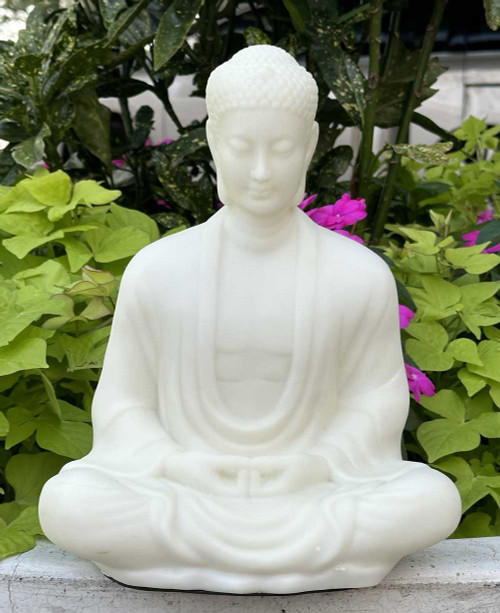


According to the legends weeping Buddha cries because our world is a sad place and someone must always weep for our sorrows. By touching the back of the buddha we pass all of our sorrows on to the weeping Buddha, thus making life a little better.
- Sandstone finish Weeping Buddha statue
- The core is made of single log of wood, with sandstone finish
- Measures about 8 inches in height, width, and depth
- Handpainted in grey textured finish
- Carved in Bali
Made by skilled Indonesian artists, each statue is individually made with unique organic finish and natural variation in wood grain and paint finish - making your statue truly one of a kind. Each statue is unique and may vary slightly in size. Made of single log of wood - texture variations and imperfections in wood surface are characteristic of this artistic tradition.
design: A curled, kneeling Weeping Buddha figure with head bowed low over folded arms, carved in a rounded, contemplative pose that captures quiet sorrow and release.
size: Approximately 8 inches in height, width, and depth.
material: Carved from a single log of wood with a hand-applied sandstone-effect painted finish.
features: Carved from a single solid log, hand-painted textured sandstone-look finish, curled weeping posture, one-of-a-kind wood grain, tabletop scale
care: Dust with a soft, dry cloth and keep away from direct sun and damp conditions to preserve the wood core and painted finish.
disclaimer: Because each statue is hand-carved from a single log and hand-painted by Balinese artisans, wood grain, texture, and finish will vary slightly from piece to piece.
Meaning & Intention
The Weeping Buddha is a lesser-known but deeply human figure in Buddhist folk tradition. Legend holds that because the world holds so much sorrow, someone must always be weeping for it — and so this Buddha takes on that quiet burden, curled inward with his face pressed low, carrying grief so others don't have to carry it alone.
The custom that grew around the statue is simple and physical: touch the Buddha's back, and in that gesture, symbolically pass your own sorrows into him. It's less about erasing pain than about not holding it alone — an old idea given a tangible form you can actually reach out and touch.
Carved from a single log by artisans in Bali and finished in a weathered, stone-grey texture, the piece has the quiet gravity of something unearthed rather than made — a fitting look for a figure whose whole purpose is to sit with what's heavy.
Placed on a shelf, altar, or meditation corner, the Weeping Buddha becomes a small daily ritual object — a place to pause, acknowledge whatever weight you're carrying, and set it down for a moment, even symbolically, before moving on with your day.
Essence & Elements
- Ideal For: Anyone moving through grief, stress, or a hard season, and looking for a quiet way to acknowledge it
- Purpose: Meditation space accent, home altar piece, grief and healing ritual object, thoughtful sympathy gift, zen home decor
- Suggested Mantra: I set my sorrows down
- Intention: Release, Healing, Compassion, Peace
- Chakra Connection: Heart Chakra
Questions & Guidance
What is the story behind the Weeping Buddha?
In Buddhist folk legend, the Weeping Buddha cries because the world holds so much sorrow that someone must always be weeping for it. Touching the statue's back is a traditional gesture of symbolically passing your own sorrows on to him.
What is this statue made of?
It's carved from a single log of wood, then hand-painted with a textured, sandstone-effect finish that gives it a weathered, stone-like appearance.
How big is the statue?
It measures about 8 inches in height, width, and depth, making it a substantial tabletop or shelf piece.
Is it suitable for outdoor display?
Because the core is solid wood, it's best kept indoors or in a sheltered spot away from direct sun and moisture, which can affect the wood and painted finish over time.
Will my statue look exactly like the picture?
Each piece is individually hand-carved and hand-painted by artisans in Bali, so wood grain and finish texture will vary slightly — every statue is one of a kind.