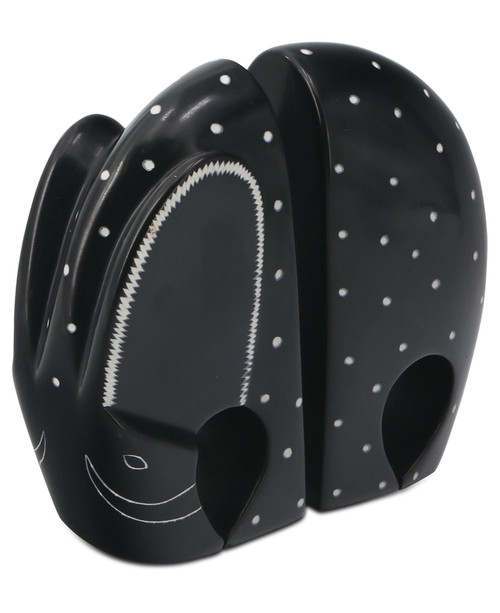


"Kijana" is Swahili for "youth" or "teenager." Two adolescents eternally reach out towards one another in this set of soapstone bookends. The soapstone used to create these bowls originates from the Tabaka Hills of Western Kenya, where the stone is known as kisii. Tribesmen from the Kisii highlands mine the stone using hand tools and carve it using traditional methods. The kisii stone can be carved into all sorts of designs.
Each of these figures is about 6 inches high, 4.5 inches wide, and 3 inches deep. Pieces weigh about 3 pounds each, plenty of heft to support your books!
- Kijana embrace bookends
- Made of soapstone
- Figures are 6 x 4.5 x 3 inches each
- Each weighs about 3lbs.
Made in Kenya
Beauty isn't perfect, it's authentic. This piece is artistically created by hand where beauty and imperfections go together wonderfully. Please accept and appreciate minor imperfections and variations which are true characteristics of this craft.
design: Two stylized, faceless figures lean toward each other with arms outstretched, their curved bodies and reaching hands forming a set of bookends that appear to hold each other — and the books between them — in a warm, wordless embrace.
size: Each figure measures approximately 6 inches high by 4.5 inches wide by 3 inches deep.
material: Soapstone (kisii stone)
features: Sold as a set of two, hand-carved by Kisii tribesmen using traditional tools, deep charcoal-black finish, substantial weight for genuine book support, one-of-a-kind hand-finished surface
care: Dust with a soft, dry cloth and keep away from harsh cleaners or prolonged direct sunlight to preserve the stone's natural finish.
disclaimer: Each piece is hand-carved from natural stone, so slight variations in shape, shading, and surface texture are normal and part of its handmade character.
Meaning & Intention
"Kijana" is Swahili for youth, and these bookends capture that particular reach of young people toward one another — arms extended, bodies leaning in, closing a distance before it's even fully formed. It's a gesture most of us recognize: the instinctive lean toward connection, whether between friends, siblings, or young love finding its footing.
The stone itself carries its own story. Kisii stone comes from the Tabaka Hills of Western Kenya, where it has been quarried and carved by hand for generations. Choosing to shape a gesture of reaching-toward out of a material that is, quite literally, of the earth roots this small scene of connection in something ancient and enduring — a reminder that the impulse to reach for one another is as old as the ground beneath us.
Placed on a shelf, the two figures don't just flank your books — they frame the space between them as the point of the piece. It's a quiet nod to the idea that what holds things together, and what holds us together, is often that unfinished gesture of reaching out.
Set on a shelf or desk, these bookends turn a practical need into a small daily reminder to stay open-handed with the people in your life — a two-second glance at two figures forever reaching toward one another, right in the middle of the books you're building your mind with.
Essence & Elements
- Ideal For: Book lovers and anyone who appreciates handcrafted African art with a warm, relational theme
- Purpose: Holding books upright on a shelf or desk, anchoring a reading nook, adding sculptural warmth to a home library, gift for a couple or close friend
- Suggested Mantra: I reach, I connect
- Intention: Connection, Love, Togetherness
- Chakra Connection: Heart
Questions & Guidance
How much do the bookends weigh, and will they hold up heavy books?
Each figure weighs about 3 pounds, giving them plenty of heft to steady a full row of hardcovers or a stack of paperbacks.
What is soapstone, and why is it used for this piece?
Soapstone, known locally as kisii stone, is a soft, carvable stone quarried in the Tabaka Hills of Western Kenya, where artisans have shaped it by hand using traditional tools for generations.
Will the two bookends look exactly alike?
They'll be close, but not identical — each is hand-carved individually, so you can expect small natural differences in shape and surface that are part of its handmade charm.
Are these bookends sold as a single piece or a pair?
They're sold as a set of two figures, designed to be used together as bookends.
How should I clean and care for soapstone bookends?
Simply wipe with a soft, dry cloth; avoid harsh chemical cleaners and extended direct sunlight to keep the stone's natural finish looking its best.