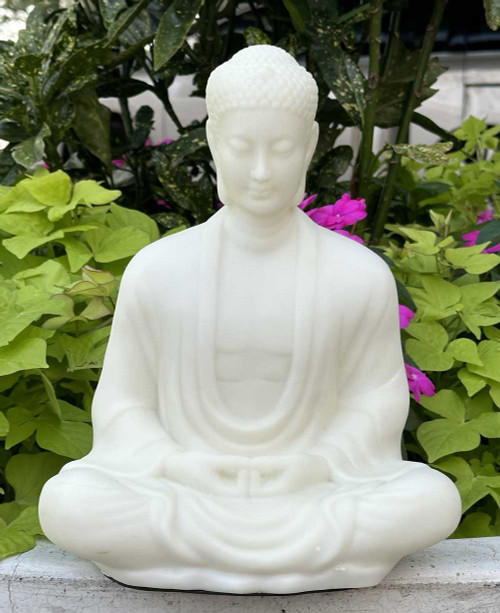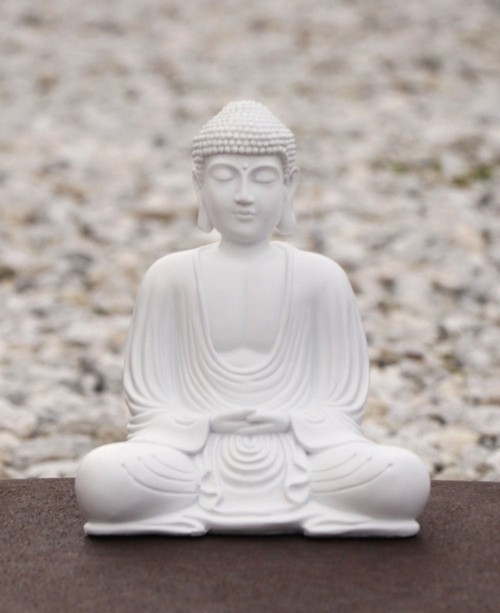


Tara translates to “The One Who Saves.” Highly revered in Tibet and Nepal, she is the female counterpart to the bodhisattva, Avalokiteshavra. Tara is regarded as a benevolent figure, demonstrating great compassion for humans and human suffering. Though she comes in many forms and colors, this sculpture offers a detailed depiction of her calming countenance.
- Face of Tara statue
- Made of porcelain
- Measures 9 x 7.5 x 4 inches
- Weighs approximately 2 lbs. 7 oz.
- This item is fragile and must be handled with care.
design: A finely detailed bust of Tara rendered in smooth white porcelain, her eyes downcast in meditation beneath an elaborate crown, layered scrollwork hair ornaments, and delicate beaded jewelry.
size: Measures 9 x 7.5 x 4 inches and weighs approximately 2 lbs. 7 oz.
material: White porcelain (ceramic bisque)
features: hand-finished carving, ornate crown with lotus motif, flowing scrollwork hair ornaments, forehead urna dot, beaded jewelry detail, tabletop bust form
care: Dust gently with a soft, dry cloth and keep away from moisture, direct sun, and rough handling to preserve the porcelain finish.
disclaimer: As a hand-finished porcelain piece, minor variations in shade and sculpted detail may occur from one statue to the next.
Meaning & Intention
Tara's name means "The One Who Saves," and few figures in Tibetan and Nepali Buddhism are more beloved. As the female counterpart to the bodhisattva Avalokiteshvara, she embodies compassion in its most active form — not distant or abstract, but ready to respond the moment she is called upon. Legend holds that she was born from a tear of compassion, making her presence inseparable from the act of caring for others.
This sculpture isolates her face and crown, the part of Tara's form where her character is most legible. The downcast eyes suggest inward awareness rather than withdrawal — a gaze turned toward wisdom, not away from the world. The dot at her brow, the urna, is a traditional mark of spiritual insight, while the tiered, flame-like crown signals her enlightened status, adorned the way early Tibetan artisans envisioned a liberated being: regal, serene, unhurried.
Tara appears in many forms and colors across the tradition, each associated with a different quality — protection, longevity, swift action. Rendered here in unglazed white porcelain, this face carries the calm, contemplative register most associated with her most peaceful aspect, a reminder that compassion, at its steadiest, looks like stillness.
Kept on a shelf, altar, or writing desk, this bust becomes a quiet check-in point during the day — a face that asks nothing but reflects back a kind of steadiness worth returning to. For anyone building a meditation space or simply wanting one object in the room that slows them down, Tara's calm expression does that work without a word.
Essence & Elements
- Ideal For: Meditation practitioners, Buddhist art collectors, and anyone building a sacred or contemplative home altar
- Purpose: meditation focal point, home altar centerpiece, shelf or desk display, gift for a Buddhist practitioner
- Suggested Mantra: Om Tare Tuttare Ture Svaha
- Intention: Compassion, Grace, Inner Strength, Serenity
- Chakra Connection: Heart Chakra
Questions & Guidance
What is this statue made of?
It's crafted from white porcelain with a smooth, unglazed bisque finish that highlights the fine detail in the crown and facial features.
Who is Tara, and why is only her face and crown shown?
Tara is a revered compassion deity in Tibetan and Nepali Buddhism, known as "The One Who Saves." This piece focuses on her face and headdress, the traditional focal point for conveying her serene, awakened nature.
How big is the statue?
It measures 9 x 7.5 x 4 inches and weighs approximately 2 lbs. 7 oz., making it substantial enough to anchor a shelf or altar without being oversized.
How do I care for a porcelain piece like this?
Simply dust it with a soft, dry cloth and keep it away from moisture and direct sunlight. Handle it carefully, as porcelain is fragile.
Where should I place it?
Many people set it on a meditation altar, bookshelf, or desk — anywhere they'll see her calm expression regularly throughout the day.