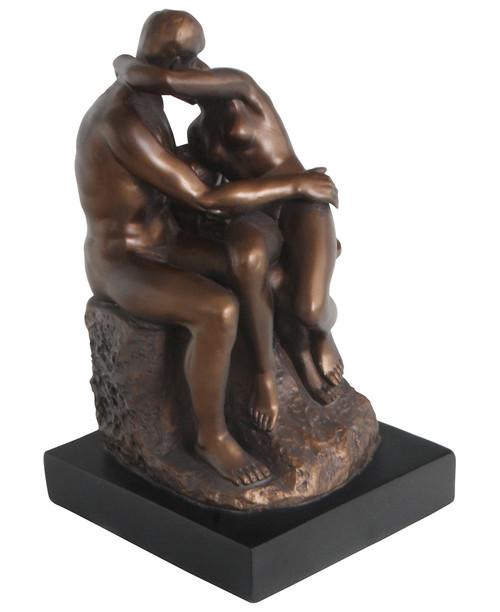


- Replica: Egyptian Museum, Cairo. 664-332 B.C.,
- Measures 5 inches tall, 4.5 inches wide and 4 inches deep
- Made of bonded stone (crushed marble in resin), Weighs about 4 lbs
- Part of the Ancient Treasures Collection: The makers of the Original Kek Statue
- Artistic antique bronze finish with subtle patina color detailing
The Goddess Heket, who was represented in the form of an Egyptian frog or with a frog's head, was worshipped especially in the town of Hew-Wer as the female complement of Khnum. Together with other Gods she assisted in fashioning the child in the womb and presided over the birth in her capacity of midwife. Amulets and scarabs worn by women to protect them during childbirth often bear the image of the Frog Goddess. The life-giving powers of Heket enabled her to be adopted as a benign deity fit to accompany Osiris, in whose temble at Abidos she receives wine from King Seti I and is labelled "Mistress of the Two Lands".
design: A seated frog rendered in weighty, naturalistic detail perches on a rectangular plinth inscribed with hieroglyphs, its surface finished in warm antique bronze with pooling patina in the creases and folds.
size: 5 inches tall, 4.5 inches wide, 4 inches deep; weighs about 4 lbs.
material: Bonded stone (crushed marble set in resin) with an antique bronze finish.
features: Museum replica sourced from the Egyptian Museum in Cairo, hieroglyphic inscription on the base, hand-applied patina detailing, part of the Ancient Treasures Collection, solid weighted base for stable display
care: Dust regularly with a soft, dry cloth and keep away from prolonged moisture or direct sun to preserve the finish.
disclaimer: As a hand-finished bonded stone piece, slight variations in patina tone and surface texture are natural and make each statue unique.
Meaning & Intention
Heket, the frog-headed goddess of ancient Egypt, presided over childbirth and the mystery of life taking form. Worshipped alongside Khnum in the fashioning of the child in the womb, she was the divine midwife invoked at the moment of birth itself, her image carried on amulets and scarabs to guard women through labor.
The frog was no arbitrary emblem. Its transformation from egg to tadpole to fully formed creature made it, to Egyptian eyes, a living symbol of spontaneous creation and renewal, appearing each year with the life-giving flooding of the Nile. Heket's power was thus bound to fertility, regeneration, and the turning of death back toward life, a role that carried her into funerary belief as a guide who could help the deceased be reborn.
Her honored place beside Osiris at Abydos, where she is shown receiving wine from Seti I as "Mistress of the Two Lands," reflects a goddess trusted at the threshold moments: birth, death, and the passage between them. This statue carries that same quiet authority, a small, grounded presence for anyone drawn to new beginnings.
Set on a desk, altar, or windowsill, this statue serves as a steady, low-key reminder that growth often happens unseen before it becomes visible, much like Heket's frog moving through its own quiet transformation. It suits anyone marking a new chapter, whether that is a pregnancy, a creative undertaking, or simply the desire to welcome change with more trust and less resistance.
Essence & Elements
- Ideal For: Those drawn to Egyptian history, fertility and new-beginnings symbolism, or expecting and new mothers
- Purpose: Home décor, altar or meditation focus, gift for an expecting mother, collector's piece for Egyptian antiquities enthusiasts
- Suggested Mantra: I welcome new life
- Intention: Renewal, Protection, Fertility, Transformation
- Chakra Connection: Sacral Chakra
- Zodiac: Cancer
Questions & Guidance
Who was the goddess Heket in ancient Egyptian mythology?
Heket was the frog-headed goddess of childbirth and creation, believed to assist in forming the child in the womb and to preside over labor as a divine midwife.
What is this statue made of?
It is cast in bonded stone, a mixture of crushed marble and resin, then hand-finished in an antique bronze tone with patina detailing.
What do the markings on the base mean?
The base carries hieroglyphic inscriptions in keeping with the original piece it replicates, the Heket statue held in the Egyptian Museum, Cairo.
How big is the statue and how much does it weigh?
It stands 5 inches tall, 4.5 inches wide, and 4 inches deep, and weighs about 4 lbs, substantial enough for stable display on a shelf or altar.
How should I care for it?
Simply dust with a soft, dry cloth and keep it out of prolonged direct sun or damp conditions to protect the bronze finish.